Project Overview
NutriEase is a full-stack, AI-powered web application for intelligent meal planning, cost-efficient grocery management, and nutrition tracking. It helps users make healthier food choices while minimizing food waste by integrating personalized recommendations, user preferences, and pantry inventory data.
Modern lifestyles leave little time for thoughtful meal planning. People often struggle with:
- Dietary restrictions (allergies, vegan, keto, etc.)
- Limited budgets
- Lack of nutritional knowledge
- Food waste due to uncoordinated grocery use
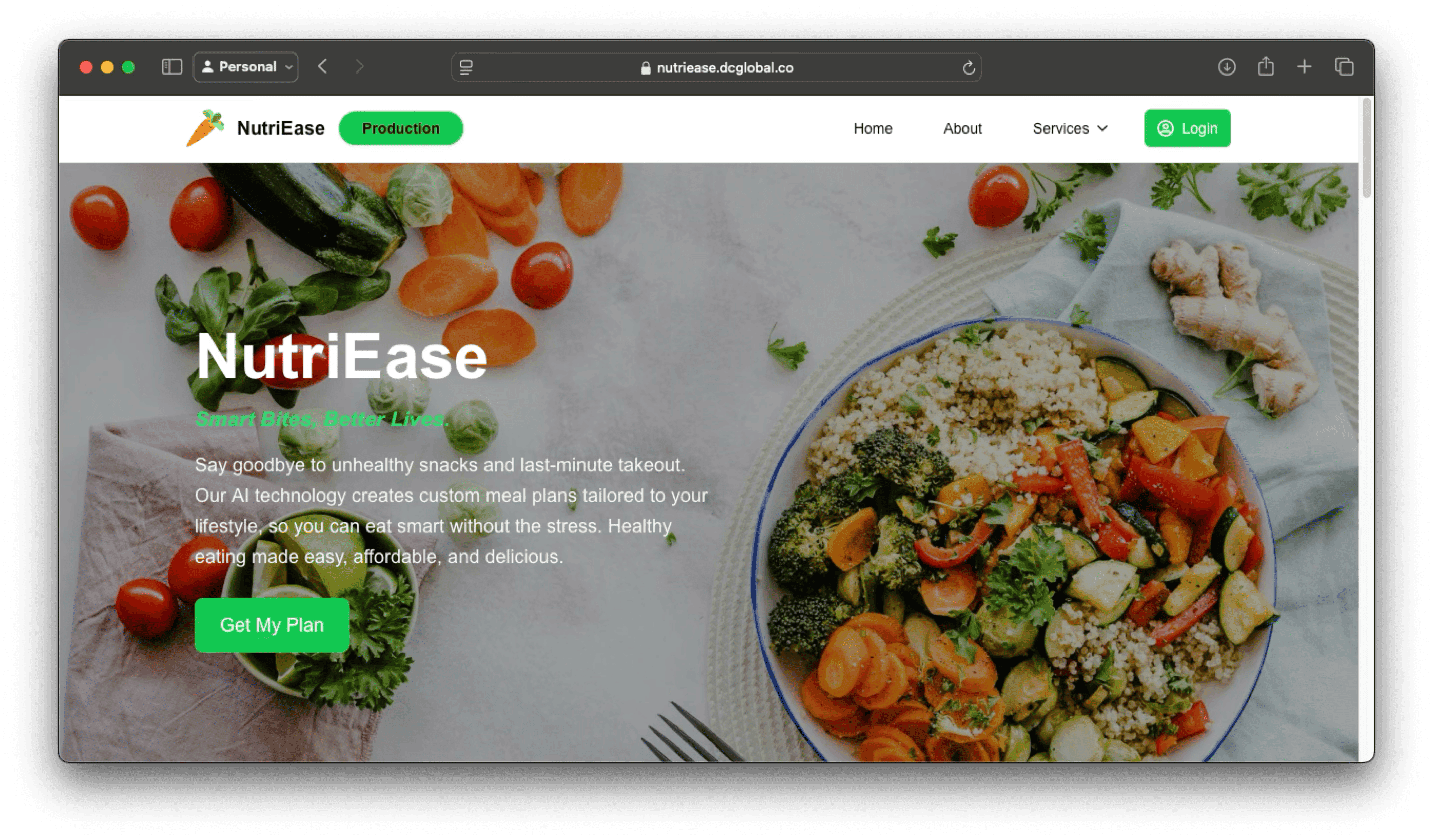
NutriEase Dashboard Example
NutriEase solves this by offering:
- AI-curated meal plans
- Ingredient-based meal suggestions
- Nutrition and cost transparency
- Community-driven recipe engagement
Problem-Solution Fit
Key Problems Addressed
- No existing tool connects personal health data with meal planning in a practical, automated way.
- Existing apps often neglect cost estimation and ingredient availability.
- Users face information overload when trying to balance health, budget, and taste.
NutriEase Approach
NutriEase offers a data-driven, user-first system. It leverages AI to personalize the user experience dynamically by taking into account:
- Dietary goals
- Pantry contents
- Nutrition targets
- Cost sensitivity
System Architecture
NutriEase is architected with a focus on modularity, scalability, and developer ergonomics.
Frontend
| Stack | Purpose |
|---|---|
| Next.js | Provides server-side rendering (SSR) for fast, SEO-friendly user experience. Enables dynamic routing and hybrid static/server pages. |
| Tailwind CSS | Utility-first CSS framework for rapid UI development with full responsiveness and accessibility in mind. |
| TypeScript | Enforces type safety at compile time, preventing runtime bugs and improving maintainability. |
Backend
| Technology | Purpose |
|---|---|
| Django | Robust and scalable backend framework, ideal for building secure, RESTful APIs with the Django REST Framework (DRF). |
| Django REST Framework (DRF) | Handles serialization, authentication, and API views with high flexibility. |
| PostgreSQL | Used as the relational database to store structured data such as user profiles, recipes, health logs, and pantry items. |
| Celery + Redis | For asynchronous task processing (e.g., AI calls, meal generation caching). |
| Django Signals | Used for hooks into model lifecycle events (e.g., trigger plan generation after profile update). |
AI Integration
NutriEase uses large language models to power key functionality:
| Model | Role |
|---|---|
| GPT-4 (OpenAI) | Generates recipes and meal plans based on dietary input, user preferences, and nutritional targets. |
| Gemini (Google) | Assists with contextual chat-based interactions like cooking instructions or substitution suggestions. |
Both models work in tandem via prompt engineering and chained API calls. The system continuously refines suggestions based on user interaction history.
Data Flows
-
User Profile Creation
- Captures height, weight, age, health goals, activity level, and dietary preferences.
- Stored securely in MongoDB.
-
Meal Plan Generation
- Inputs: Profile data, inventory data, dietary filters.
- GPT-4 generates a 7-day meal plan with nutritional breakdown.
- Result cached and displayed via React components.
-
Cooking Assistant
- Gemini provides real-time recipe assistance in a chat UI.
- Supports queries like “substitute for tofu” or “how to sauté onions.”
-
Ingredient Utilization Engine
- Users input pantry/fridge items.
- Backend filters AI suggestions based on what's available, helping minimize food waste.
Core Features (Technical Breakdown)
AI-Powered Meal Planner
- Input: User profile, restrictions, available ingredients.
- Output: 7-day meal plan (breakfast, lunch, dinner) with calories, macros, cost/serving.
- Technology: GPT-4 + MongoDB + Express route → AI prompt orchestration.
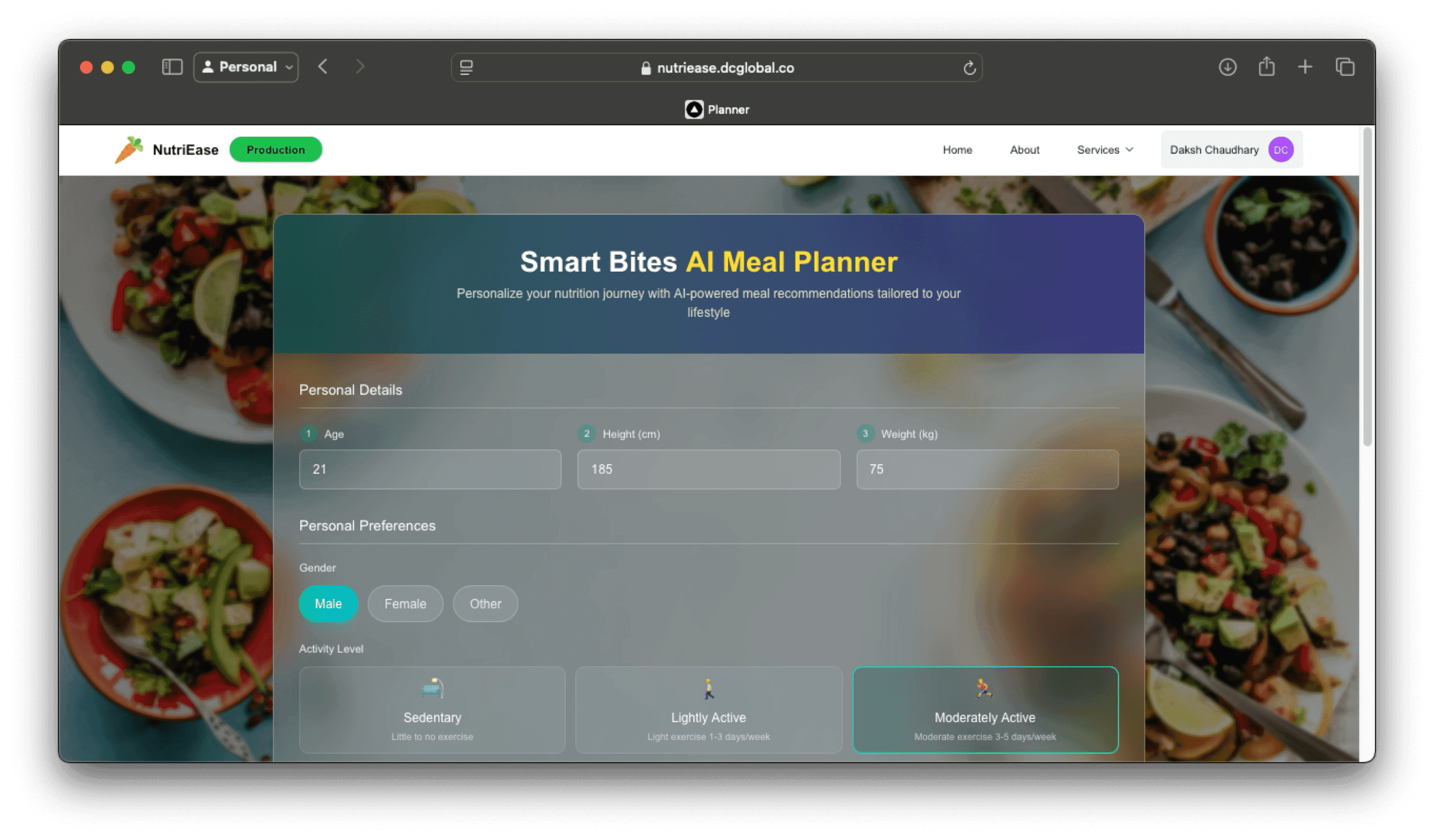
AI-Powered Meal Planner
Nutrition & Cost Engine
- Calculates:
- Total calories
- Macronutrients (protein, fats, carbs)
- Cost per recipe and per serving
- Combines nutritional databases with regional cost datasets.
Virtual Cooking Assistant
- Conversational agent for step-by-step instructions.
- Supports follow-up questions, cooking techniques, and substitutions.
- Real-time Gemini AI prompt handling with token-aware messaging.
Ingredient-Aware Suggestions
- Accepts user-submitted pantry/fridge inventory.
- Filters AI-generated meals to maximize available resource use.
- Helps reduce both cost and waste.
Community Platform
- Users can share custom recipes, comment, and rate.
- Built with a schema-ready architecture to support social interactions.
Performance and Scalability
NutriEase is built with scale in mind.
-
Containerization
Docker is used to containerize the application, ensuring consistency across environments and simplifying CI/CD workflows. -
Horizontal Scalability
Stateless microservices architecture allows for distributing load across multiple Node.js instances. -
Caching & SSR
Next.js handles page-level caching with fallback support for dynamic rendering. Frequently requested meal plans and ingredient queries are cached to reduce AI API costs.
Deployed using container orchestration (Docker) and CI/CD pipeline on cloud infrastructure. CDN caching via Cloudflare for global performance.
NutriEase is more than a project — it’s a real-world application of AI, sustainability, and intelligent web engineering brought together through thoughtful design and robust architecture.
